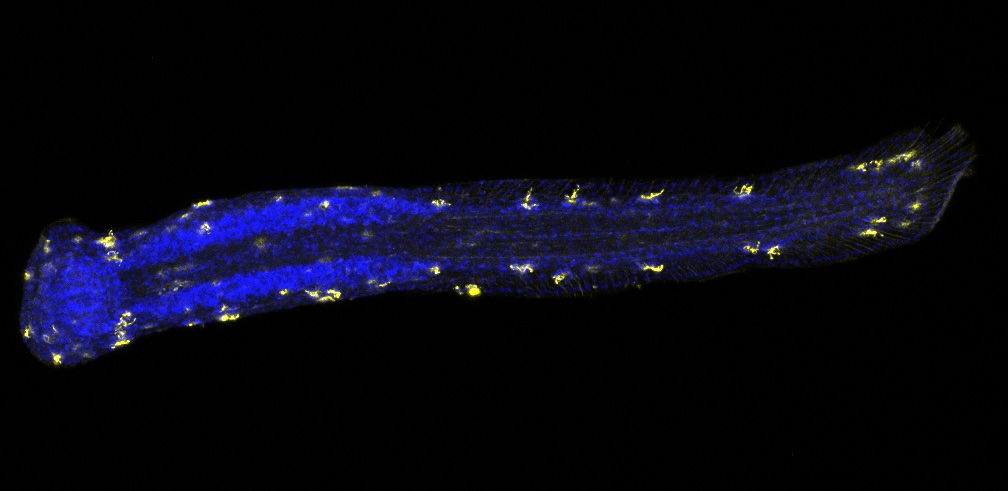
After many years in the making, the chaetognath genome has been published in Nature, led by Laura Piovani with key contributions from Daria Gavriouchkina, Alex de Mendoza, Taichiro Goto and many others. Chaetognaths have barely changed their body shape since the Cambrian, yet their genome tells a very different story — one of extreme reshuffling, massive gene loss, and the invention of thousands of new genes. By combining the genome with single-cell transcriptomics and epigenetic data, we could link this unusual genomic history directly to the emergence of specialized cell types that make chaetognaths such effective predators.
A press release was issued by OIST, where part of this work was initiated.
This picture shows the sensory cell type involved in chaetognath predation (L. Piovani).
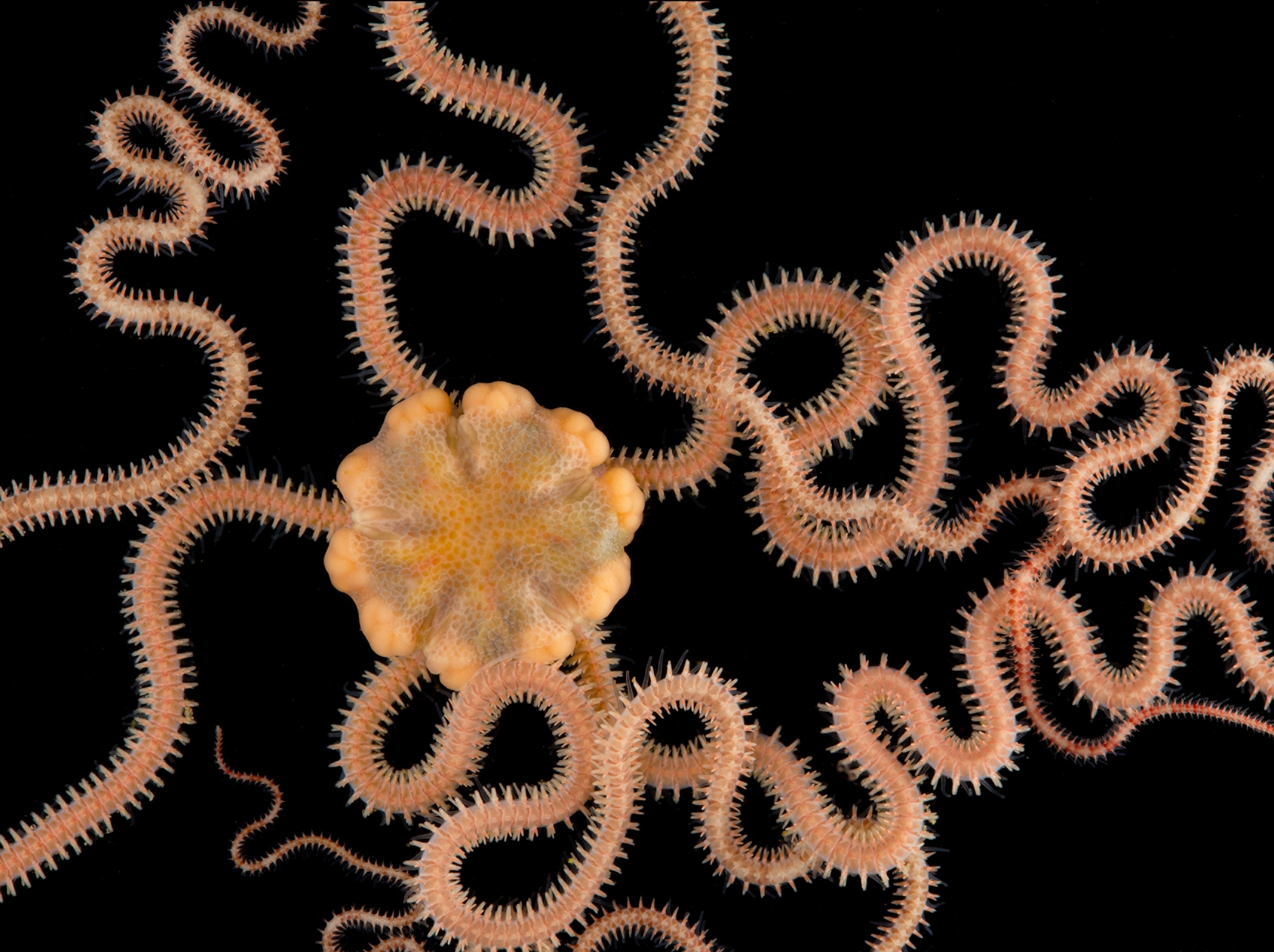
What makes some animals capable of regrowing lost limbs? Our paper out in Nature Ecology & Evolution, led by Elise Parey with contributions from Olga Ortega-Martinez, Paola Oliveri and many others, takes on this question through the genome of the brittle star Amphiura filiformis, one of the most striking examples of appendage regeneration in the animal kingdom. Beyond the genome itself, by profiling gene expression throughout arm regeneration and comparing it across animals, we uncovered hundreds of genes with conserved dynamics from crustaceans to vertebrates, pointing to a surprisingly ancient origin of the regenerative toolkit. Here is UCL press release
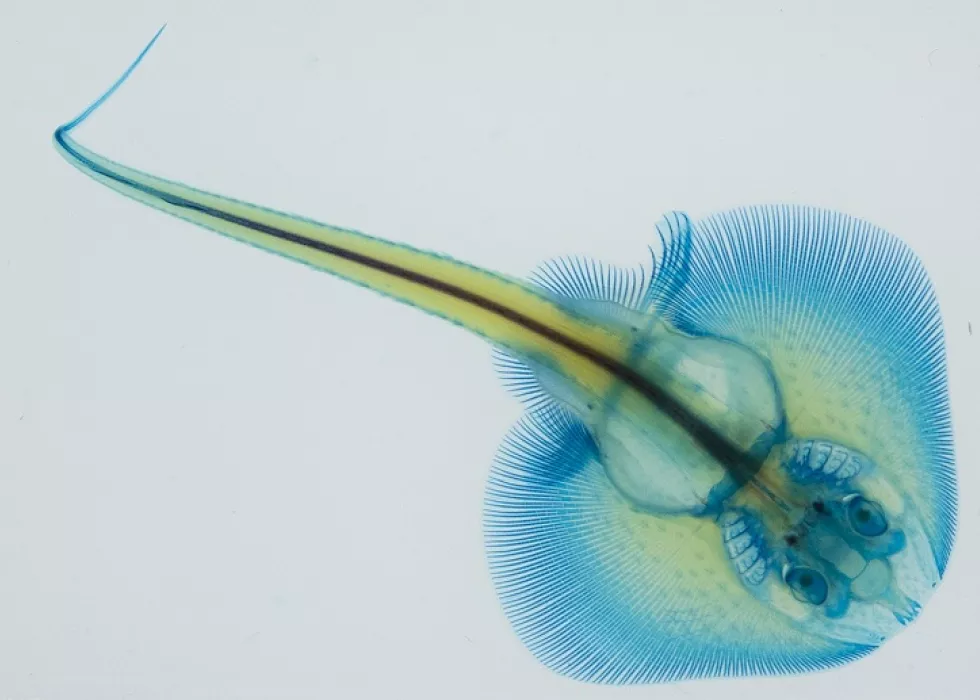
Our paper on the little skate genome has been published in Nature in a large collaboration led together with Darío Lupiáñez, Juan Tena and Testuya Nakamura. By combining a chromosome-scale genome with extensive regulatory datasets in developing fins, we uncovered skate-specific genomic rearrangements that rewire the three-dimensional regulatory landscape of genes involved in planar cell polarity — shedding light on the molecular origin of the skate’s iconic wing-like fins.